Calyraen
Calyraen
Searching the site...
No matches. Try another word.
Calyraen Foundation, Health & Research

Putting the machines we build to work on medical research.

Modern medical research runs on an enormous amount of computing. We make computers and servers for a living, so we keep some of that capacity pointed at research that helps people, and we write up what we learn along the way.

What this looks like

A few plain pieces. Each one opens a chapter.

A cluster given to research

We keep a proactive research cluster running for science, always on, taking its share of work that needs a great deal of computing.

Our cluster

Where computing helps

A lot of modern medicine is, underneath, a computing problem. Here is the wider map, and where a contribution like ours fits.

The landscape

Protein folding

Our flagship contribution: helping work out the protein shapes that so much of medicine is built on.

Take a look

Open write-ups

We publish free, evidence-based reviews of the research we help with, and we are honest about the limits.

Publications

What we stand for

Always on
A research cluster we keep running for science, day and night
One of many
We contribute alongside universities, volunteers and other companies
Free
Every review and paper we publish is free to read
Honest
We are clear that our part comes early in a long chain

What we have published

Free, evidence-based reviews and write-ups from the research work we help with.

Want the detail?

Our lead paper walks through the science we help with, from how a protein's shape becomes its function to where it has already reached patients.

Read the paper
Our approach

We contribute computing to research that helps people.

We do not wear white coats. What we have is the thing a lot of medical research now needs alongside the scientists: a great deal of computing, kept running patiently.

Why computing matters to medicine

A lot of modern medical research is, underneath, a computing problem. Working out the shape of a protein, sifting through genetic data, modelling how a molecule behaves, simulating a process too small or too fast to watch directly: all of it takes a great deal of computing, applied patiently over a long time. The science is done by researchers. What it increasingly needs alongside them is capacity, and capacity is something we can give.
What we actually do

We build computers and servers, so contributing computing is the natural thing for us to give. We keep a proactive research cluster of our own, always on, that takes its share of large distributed research efforts and returns the results to the shared pool. It is a quiet, steady thing, done alongside universities, volunteers and other companies who do the same. When a rare result shows up a little sooner because there were more machines on it, the pooled effort we are part of is some of the reason.

Where our part starts and stops

It would be easy to overstate a contribution like this, so we try not to.

We contribute, we do not claim

We provide computing, one contribution among many. We do not run the studies, design the experiments, or interpret what comes back. The researchers do the science, and they are the ones who matter.

We publish plainly

When we write something up, it is a free, evidence-based review of what the research covers, with the limits stated as clearly as the findings.

We stay early in the chain

Computing like ours sits well upstream of any treatment. Between a result on a screen and a medicine that helps someone are years of laboratory and clinical work that no amount of computing removes.

See it in practice.

Protein folding is the clearest example of the kind of research we contribute to, and the one we have written up in full.

Protein folding
Our technology

A dedicated cluster, always on, given to research.

We build computers and servers. The most direct thing we can give research is some of that same capacity, kept running around the clock rather than left to sit idle.

What it is

The cluster is a pool of the same machines we build, set aside and kept running for science. It does not wait around for spare moments. It is a proactive, always on contribution: it takes its share of large distributed research efforts, works through the pieces handed to it, and returns the results to the shared pool. Because it is our own hardware, we can keep it steady and predictable, which is exactly what long running research benefits from.

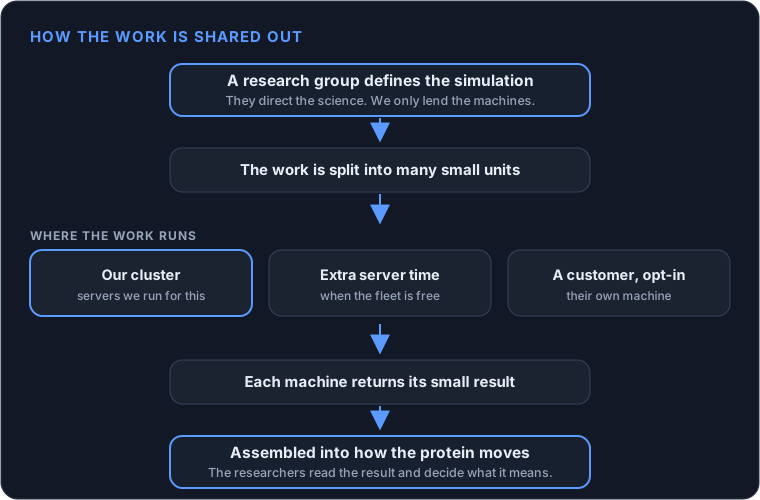
How the work is split into pieces, run across many machines, and pooled

How large research efforts share the work: it is split into small pieces, run across many machines, and pooled back together. Our cluster is one of those machines.

How the work reaches us

Big research efforts do not need one enormous computer so much as a lot of computing applied patiently. The work is broken into small pieces, handed out to machines all over the world, and the answers are pooled. Our cluster takes a steady share of those pieces and sends its results back, one contributor among thousands.

How the cluster is run

The point is to be dependable, not dramatic.

Always on, not spare cycles

This is dedicated capacity, not leftover time on machines doing something else. Running for research is its job, day and night.

Built on what we make

It runs on the same servers we build, which means we know them well and can keep them healthy, patched and running for the long haul.

Part of a bigger pool

On its own it is one contributor. Its value comes from joining thousands of other machines and adding to a shared effort that no single one could manage.

What is it working on?

The clearest example of the research our cluster contributes to is protein folding.

Protein folding
The landscape

A lot of medicine is, underneath, a computing problem.

Capacity like ours matters because so much modern medical research depends on it. Here is the wider map of where computing does the heavy lifting, and where a contribution of it fits.

Where computing does the heavy lifting

Different problems, one thing in common: they are hungry for computing.

Drug discovery

Fitting a molecule to a protein, and screening enormous numbers of candidates, is done on computers long before anything reaches a lab bench.

Genetics and sequencing

Reading a genome produces vast amounts of data. Comparing it and spotting the meaningful differences is heavy computing.

Medical imaging

Scans are increasingly read with the help of models trained on huge image sets, which take a lot of computing to build and check.

Simulation and modelling

From how a protein moves to how a disease spreads through a population, researchers model what they cannot easily watch directly.

Where our part fits

We are not doing all of this. Most of it is done by researchers with their own tools and their own expertise, and that is exactly as it should be. What ties these fields together is that they are hungry for computing, and computing is the thing we can add.

Our contribution is general purpose capacity, given to the efforts that pool it together. The clearest example, and the one we have written up in full, is protein folding, where the computing that reveals how a protein moves is some of the hardest to come by.

See the clearest example.

Protein folding is where this kind of contributed computing has the sharpest story, from the science to real treatments.

Protein folding
Flagship area

Protein folding, the shape medicine is built on.

A protein's shape decides what it does, and working that shape out is one of the most computing-hungry problems in medical research. It is the effort we contribute to most.

Shape is function

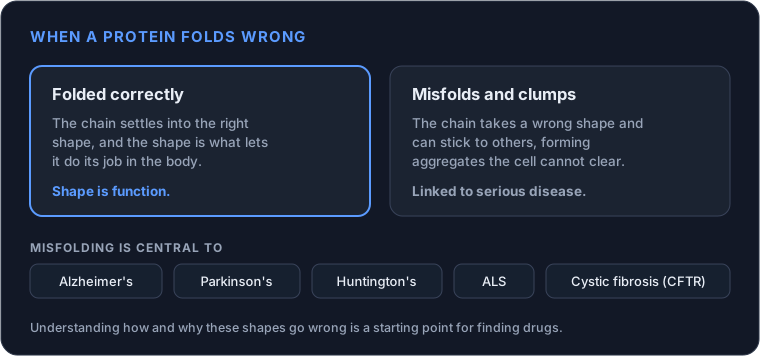
A protein folds into a three dimensional shape, and that shape is the reason it works. Its pockets and surfaces are what let it grab a molecule or lock onto a partner. Because the job depends on the shape, a small change can change the job, which is why a single genetic change can ripple outward into a protein that works differently, or not at all.

A protein folded correctly versus one that misfolds and clumps

When a protein folds wrong and clumps, the result is tied to some of the hardest diseases in medicine, from Alzheimer's and Parkinson's to cystic fibrosis.

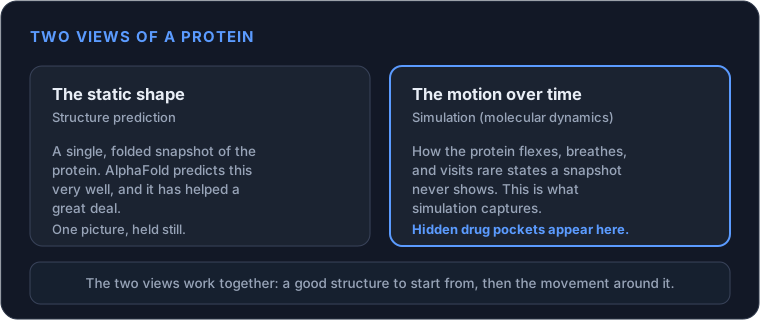
A still picture is not enough

Computers can now predict a protein's folded shape well. But a real protein is not frozen. It flexes and shifts, and a place where a drug could bind is sometimes hidden until the protein moves a certain way. Simulating that motion is where those hidden pockets show up, and it is the part that takes so much computing, which is where a research cluster like ours helps.

A static predicted structure versus a simulation of the protein moving over time

A predicted structure is one still picture. Simulation shows the motion, which is where hidden drug pockets appear.

Where it has helped medicine

Understanding a protein's shape has already reached real patients.

Drugs designed from shape

HIV and influenza drugs were designed by fitting a molecule to a protein's known shape.

Fixing a misfolded protein

Cystic fibrosis correctors help a broken protein fold and work. They are approved treatments today.

Cancer, including women's cancers

HER2 and hormone breast-cancer drugs, and the HPV vaccine, are all built around proteins.

New targets from motion

Simulating movement found hidden pockets on the coronavirus spike, new places for a drug to aim.

Read the full paper.

It covers the science end to end, with the figures above in context and the references behind each claim.

Read the paper
Publications

What we publish, free to read.

When the research we help with covers something worth explaining plainly, we write it up: an evidence-based review, with the limits stated as clearly as the findings.

Medical and research papers

Free reviews and write-ups from the research work we contribute computing to.

How to read them

Each paper is written for a general reader, not only specialists. They are free, they cite their sources, and they are honest about how far the science has actually reached. If you only read one, start with the protein folding paper, which is the fullest account of the research we contribute to.

Start with the lead paper.

How protein folding helps medicine, from how a shape becomes a function to where it has already reached patients.

Read the paper

We value your privacy

We use cookies to run this site and, with your consent, to analyse traffic and improve your experience. You can accept all, reject non-essential, or choose by category. Learn more

Strictly necessary
Required for the site to work, covering security, sessions, and remembering this choice. Always on.
Preferences
Functional cookies that remember your language, region and interface choices.
Analytics
Help us understand how the site is used so we can improve it.